
History and curiosities of Milan Cathedral: the secrets of the Duomo and its construction
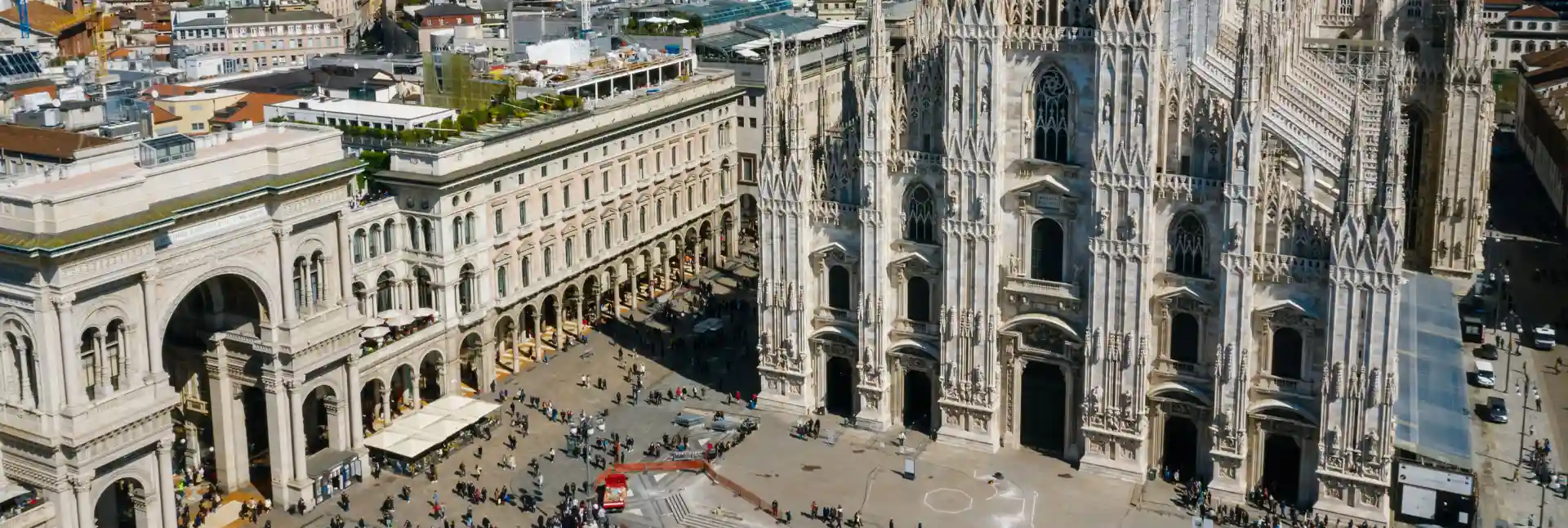
The Milan Cathedral is one of those monuments capable of impressing visitors even before they step inside. Its enormous façade, Gothic spires and the silhouette of the famous Madonnina have been part of Milan's iconic skyline for centuries.
Behind the spectacular appearance of the Milan Duomo lies a fascinating history filled with transformations, symbols, curiosities and architectural details that many visitors are unaware of. From centuries-long construction works to striking sculptures and urban legends, this monument is far more complex than it first appears.
The history of the Milan Duomo: centuries of construction and transformation
The history of the Milan Cathedral officially began in 1386, when Gian Galeazzo Visconti promoted the construction of a magnificent church that would reflect the city's political and religious power.
What no one could probably have imagined at the time was that the construction of the Duomo would continue for centuries. In fact, the cathedral took so long to complete that different architectural styles, techniques and entire generations of architects, sculptors and craftsmen contributed to its creation.
How one of Europe's greatest Gothic cathedrals was born
Although Italy is not as closely associated with Gothic architecture as some other European countries, the Milan Cathedral is one of the finest examples of this architectural style on the continent.
The project aimed to create a monumental building that would impress both through its scale and its decorative richness. To achieve this, marble from the quarries of Candoglia was used, a material that still gives the monument its distinctive light colour today.
Over the centuries, artists and architects from different parts of Europe contributed to the project. This combination explains why the Milan Duomo features French Gothic elements, Central European details and architectural solutions characteristic of the Italian tradition.
The Duomo and Milan's historical evolution
The construction of the cathedral has always been closely linked to the history of Milan. The monument survived political changes, wars, occupations and urban transformations that completely reshaped the city.
During the Napoleonic era, for example, construction of the Duomo received a significant boost. Napoleon Bonaparte wished to be crowned King of Italy in Milan and ordered part of the façade to be completed more quickly in order to reinforce the cathedral's monumental appearance.
That is why visiting the Milan Cathedral today also means exploring an important part of the city's political and cultural history.
The curiosities of the Milan Duomo that surprise visitors the most
Beyond its impressive size and religious importance, the Milan Cathedral is full of fascinating details that help explain why it continues to captivate everyone who visits.
Many of these features go unnoticed at first glance, yet they make exploring the Milan Duomo an even more rewarding experience.
The Madonnina, the city's great symbol
One of the monument's most iconic features is the famous Madonnina, the gilded statue of the Virgin Mary standing atop the cathedral's highest spire.
Installed in the 18th century, it has since become one of Milan's greatest symbols. For many years there was even an unwritten tradition stating that no building in the city should be taller than the Madonnina.
Today, although Milan is home to modern skyscrapers, many of them still feature small replicas of the statue as a symbolic tribute to the city's traditions.
The thousands of sculptures and hidden figures of the Duomo
The façade and terraces of the Milan Cathedral are covered with thousands of sculptures, religious figures, mythical creatures and decorative elements.
It is estimated that the monument contains more than 3,000 sculptures throughout the building, illustrating the extraordinary level of detail found in the Duomo.
Among the most curious figures are demons, mythological creatures and historical characters hidden among the Gothic pinnacles and spires. Many visitors walk through the cathedral without realising how many symbolic details are concealed throughout its façades.
The striking statue of Saint Bartholomew Flayed
Inside the cathedral stands one of Italy's most remarkable sculptures: the statue of Saint Bartholomew Flayed.
The sculpture depicts the saint carrying his own skin over his shoulders and is renowned for its astonishing anatomical accuracy. Muscles, veins and tendons are carved with extraordinary realism, especially considering the period in which it was created.
This masterpiece often becomes one of the biggest surprises of a visit to the Milan Duomo, as it completely contrasts with the traditional works of art that many visitors expect to find inside a cathedral.
A monument filled with symbols, legends and unexpected details
The Milan Cathedral impresses visitors not only because of its size. Much of its charm lies in the countless small details scattered throughout the building, many of which often go unnoticed.
That is precisely why the Duomo is one of those monuments best appreciated with plenty of time, carefully observing every corner.
The Gothic features that many visitors overlook
The cathedral's spires, pinnacles and decorative ornaments are not merely aesthetic features. Many also had symbolic meanings related to spirituality and the connection between heaven and earth.
Furthermore, Gothic architecture sought to create a strong sense of verticality and grandeur. This is why so much of the Milan Duomo's architecture naturally draws the visitor's gaze upward.
Even the stained-glass windows and interior lighting were carefully designed to create a specific emotional experience for those entering the cathedral.
Napoleon and his connection with Milan Cathedral
One of the most fascinating historical episodes connected to the monument involves Napoleon Bonaparte.
When he decided to crown himself King of Italy in Milan, Napoleon wanted the ceremony to take place inside the Milan Cathedral and ordered work on part of the façade to be accelerated.
Even today, a statue of Napoleon can still be seen on one of the Duomo's spires, a detail that many visitors overlook during their visit.
Discover the history of the Duomo and enjoy a unique experience in Milan
Visiting the Milan Cathedral means discovering centuries of history, art and architecture brought together in one of Europe's most impressive monuments.
Its sculptures, legends, terraces and countless hidden details make every visit to the Milan Duomo a unique experience full of discoveries.
If you would like to explore this extraordinary monument in greater depth and discover all its hidden treasures, book your tickets to Milan Cathedral today and enjoy one of the must-see attractions of any trip to Italy.